There is a question about African urbanization that I think we need to ask more often:
Who is designing Africa's cities, and on what basis do we decide what a successful African city should look like?
This is not a question against international knowledge, foreign investment, or learning from other parts of the world. Cities have always learned from one another. The question is whether ideas developed in one context should automatically become the foundation for another.
Africa is entering one of the most important urban transitions in its history. According to Africa's Urbanisation Dynamics 2025, Africa's urban population is projected to reach approximately 1.4 billion people by 2050, adding around 700 million urban residents over the next three decades. Even more striking, 80% of the continent's demographic growth is expected to be absorbed by urban areas.
That means the cities we plan today will shape the lives of hundreds of millions of Africans tomorrow.
So, what kind of cities are we going to build?
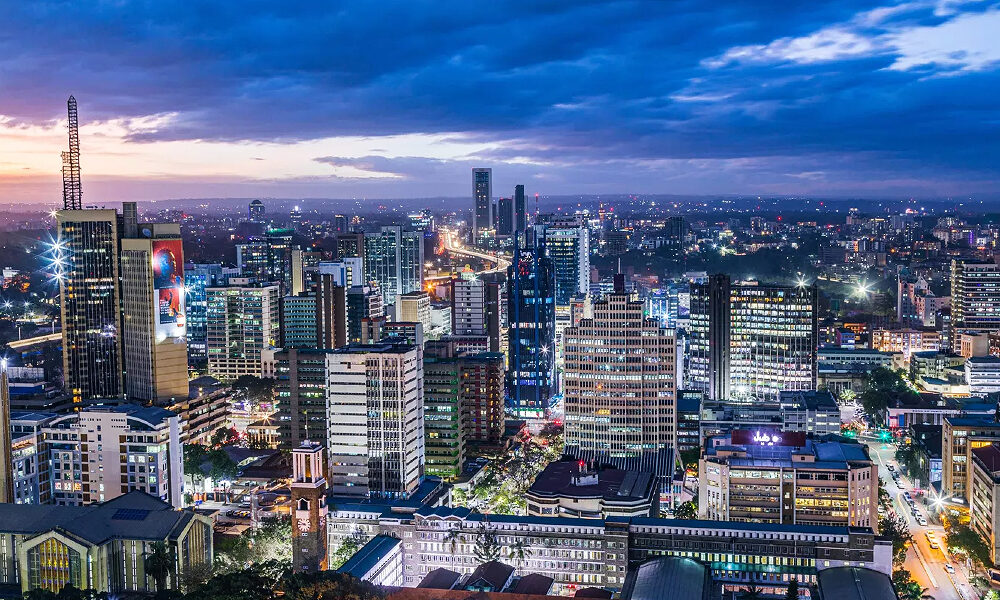
Urban development is sometimes presented through highly visible indicators: skyscrapers reaching higher into the sky, multilane highways, large numbers of vehicles, expanding built-up areas, or rapidly increasing urban populations.
But do these things automatically mean that a city is successful? I do not think so.
A city can have impressive infrastructure and still struggle with inadequate housing, poor accessibility, environmental degradation, inequality, weak public services, and limited opportunities for its residents.
A successful city should ultimately be judged by how people live.
Can people reach schools, jobs and healthcare? Can households access adequate housing? Can children grow up in safe environments? Can older people and people with disabilities move independently? Can communities participate in decisions that affect their neighborhoods? Can the city accommodate economic growth without destroying the ecosystems that support it?
These questions tell us much more about urban welfare than the number of skyscrapers on a skyline.
Perhaps one of the biggest mistakes we can make is treating "Africa" as though it were a single urban system. It is not!
From Accra to Kinshasa, Kigali to Abuja, Cairo to Cape Town, Dakar to Addis Ababa, the conditions shaping urban development are fundamentally different. Even within the same country, cities can have completely different demographic structures, economic functions, ecological conditions, governance arrangements, cultural identities and patterns of land ownership.
Africa's urban systems are diverse because African societies are diverse.
There is no single African model of urbanization, and there should not be a single African planning solution.
This does not mean that African cities should isolate themselves from international experience. Quite the opposite. There is tremendous value in learning from cities elsewhere.
But learning is different from copying.
A planning intervention that works in Copenhagen may require substantial adaptation before being applied in Kumasi. A transportation model successful in Singapore may not produce the same outcome in Ghana. A housing policy developed for a European metropolitan region may encounter entirely different realities in Nairobi or Yamoussoukro or Kigali.
This is not because one place is more capable than another. It is because planning is contextual.
Demography matters. Geography matters. Climate matters. Economy matters. Institutions matter. Culture matters. Land systems matter. History matters.
A planning solution cannot be separated from the environment in which it is expected to function.
The Problem Is Not Foreign Ideas. It Is Uncritical Adoption.
There is an important distinction here.
The problem is not that African planners should reject ideas from Europe, Asia, North America, or anywhere else.
The problem begins when a successful model somewhere else is treated as a universal formula.
Urban planning should involve learning, adaptation, experimentation and local interpretation.
A city should be able to ask:
(i) Why did this work there?
(ii) Which conditions made it possible?
(iii) Do those conditions exist here?
(iv) What would need to change for it to work in our context?
These questions should come before implementation.
The strongest planning practices are not necessarily those that reproduce another city's appearance. They are those that understand the principles behind successful interventions and adapt them to local realities.
This brings us to participation.
One of the most important principles in planning is also one of the simplest: cities should be planned with people, not simply for them.
Jane Jacobs made this argument powerfully in The Death and Life of Great American Cities, challenging planning approaches that ignored the complexity of everyday urban life.
Her work reminds us that planners and policymakers do not experience cities in exactly the same way as the people who live in them.
A master plan may look perfect on paper and still fail on the ground because it misunderstands how people actually move, trade, socialize, work, or use public space.
This is especially important in African cities, where formal planning systems often coexist with informal economies, traditional land practices, community networks and locally developed settlement patterns.
Participation is therefore not merely a democratic ideal. It is also a source of planning knowledge.
People know their neighborhoods. They know where flooding occurs. They know which roads become dangerous after dark. They know where markets naturally develop. They know which public spaces are actually used.
Ignoring this knowledge can make even technically sophisticated plans ineffective.
Across Africa, communities have developed settlements and urban environments long before the arrival of contemporary planning institutions.
Some traditional settlements have endured for centuries because they responded to local climate, geography, social organization, available materials and cultural practices.
This should not romanticize the past or suggest that traditional systems were perfect. They were not.
But they demonstrate something important: Local knowledge has planning value.
There is much to learn from how communities historically responded to their environments.
The future of African urbanization should therefore not require abandoning existing identities in favor of imported urban aesthetics.
Modernization should not mean homogenization.
A contemporary African city can be technologically advanced without becoming culturally disconnected. It can have efficient transportation without being dominated by cars. It can build vertically without sacrificing public life. It can attract investment without excluding local communities.
The Planning Challenge Ahead
The scale of Africa's urban transition makes this discussion urgent.
The continent's urban population is projected to roughly double from around 700 million to 1.4 billion by 2050. Urban areas are expected to absorb 80% of Africa's demographic growth, while the physical footprint of cities is also projected to expand substantially.
This is not simply a housing challenge. Most importantly, it is a question of what kind of urban life we want future generations to inherit.
Perhaps it is time to reconsider how we talk about urban development.
A city's success should not be measured primarily by how many skyscrapers it has, how many vehicles occupy its roads, how wide its highways are, or how much concrete covers its landscape.
These can be indicators of investment and growth, but they are not sufficient measures of urban welfare.
A better question is: Does the city improve the lives of the people who live there?
If the answer is yes, then we are moving in the right direction. If the answer is no, then even the most impressive skyline deserves to be questioned.
I believe Africa needs to become more confident in defining its own urban future.
That does not mean rejecting international cooperation. It means entering that cooperation as contributors rather than simply consumers of planning ideas.
We can take successful principles, test them against our realities, adapt them, improve them and, perhaps, develop approaches that other parts of the world will eventually learn from.
Africa should not have to choose between tradition and innovation, or between development and identity.
We should be capable of building cities that are modern without losing their character, prosperous without becoming exclusionary, connected without becoming car-dependent, and sustainable without becoming disconnected from the communities they serve.
The next generation of African planners, architects, engineers, geographers, economists, environmental professionals, public administrators and policymakers need more than technical knowledge. They need the ability to question assumptions, interpret evidence, understand communities, work across disciplines and adapt ideas to local realities.
We should learn from the world without losing sight of where we come from.

